






How Does a PP PE Film Recycling Line Process Waste Plastic Film
A PP PE film recycling line processes waste plastic film through crushing, washing, dewatering, drying, and granulation. The actual process depends on the condition of the incoming film. Clean film may need fewer washing stages, while heavily contaminated film needs stronger cleaning before pelletizing.

Waste Film Condition Determines the Recycling Process:
PP and PE films can come from packaging, agricultural use, greenhouse applications, shopping bags, and other sources. These materials often contain soil, food residue, labels, moisture, or other impurities. Therefore, the first step is to assess the material before choosing the equipment.
For dirty film, the PP PE film recycling line can crush, wash, dewater, and dry the material. Purui also lists washing systems for different film conditions and material sources.
The main processing stages include:
| Processing stage | Main function |
| Crushing | Reduce film into smaller pieces |
| Washing | Remove dirt and other contaminants |
| Dewatering | Remove most surface water |
| Drying | Prepare the film for further processing |
| Pelletizing | Melt and cut the material into recycled pellets |
This sequence gives technicians a practical way to match the recycling process with the actual condition of the waste film.
Crushing and Washing Prepare the Film for Recycling:
Waste film is first reduced in size to improve the washing result. Purui’s film recycling systems use equipment such as crushers, friction washers, floating washing tanks, and dewatering machines.
During crushing, water can also help clean the material and cool the cutting blades. The washing stages then separate dirt and other contaminants from the film. For heavily contaminated agricultural film, an additional hot washing stage can be used when required.
After washing, dewatering becomes important because excessive water can affect the following drying and pelletizing stages.

Dewatering and Drying Control the Feed Condition:
Film is light and flexible, so removing water from it requires suitable equipment. Purui’s film recycling lines use vibration dewatering, centrifugal drying, or squeezing systems according to the material and process configuration.
A plastic squeeze dryer can further reduce moisture by mechanically compressing the film. Purui states that the moisture after squeeze drying can reach 1–3% on the listed waste film production line. Actual results depend on the material and operating conditions.
For engineers, this stage matters because the condition of the film entering the granulator affects feeding and extrusion stability.

Pelletizing Converts Clean Film Into Recycled Material:
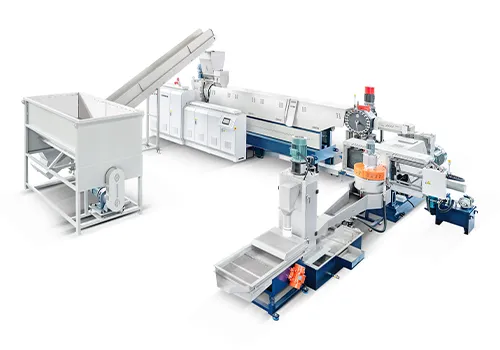
After washing and drying, the film can move to a pelletizing system. The material enters a compactor or feeding system before extrusion. The extruder then melts and plasticizes the compacted film.
Purui’s PP PE film pelletizing equipment uses a single-screw extruder with a double-zone vacuum degassing system. The system removes moisture and volatile components during extrusion. Water-ring die-face cutting or strand cutting can then produce recycled plastic pellets.
For film with high moisture or heavy printing, the equipment configuration needs closer attention. Vacuum exhaust, feeding equipment, and hydraulic screen changing can be selected according to the material condition.
Recycled Pellets Can Return to Plastic Processing:
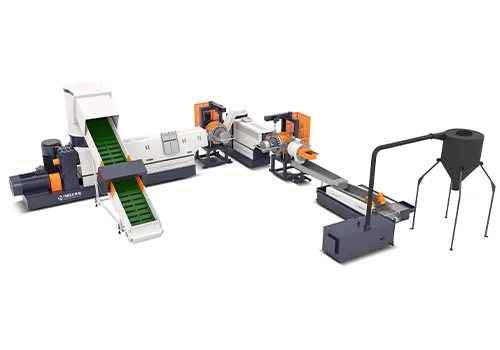
The final pellets can serve as recycled PP or PE material for further plastic production. Purui also provides a plastic film recycling pelletizing line for waste PE, PP, HDPE, and BOPP films. The listed system combines crushing, cleaning, feeding, and pelletizing, with different models covering different output ranges.
For example, the listed SJ series includes SJ150, SJ160, SJ180, and SJ200, with reference outputs from 400 to 3,000 kg/h depending on the model. Purui notes that equipment output can change with material and configuration.
In practice, the recycling line should match the film type, contamination level, moisture condition, and required capacity. A washing line and pelletizing line may work together when the incoming film requires both cleaning and granulation.
FAQ:
Q1: What materials can a PP PE film recycling line process?
A: It can process various PP and PE films, including packaging film, agricultural film, greenhouse film, and other waste plastic films.
Q2: Why does waste film need washing before pelletizing?
A: Washing removes dirt and other contaminants that can affect the quality and stability of the later pelletizing process.
Q3: How is moisture removed from waste film?
A: The line can use dewatering, centrifugal drying, or a squeeze dryer depending on the material and process requirements.
Q4: What happens after the film is dried?
A: The dried film can enter a pelletizing system, where it is compacted, melted, extruded, cooled, and cut into recycled pellets.
Q5: Does every PP PE film need the same recycling line?
A: No. Equipment selection depends on the film condition, contamination level, moisture content, material type, and required production capacity.
Why Choose Purui Machinery:
With over 25+ years of expertise and a footprint in over 100 countries, Purui Machinery continues to lead the way in plastic regeneration.

Purui Machinery is a high-tech enterprise specializing in the R&D and manufacturing of plastic recycling machinery. Its product portfolio includes plastic pelletizing lines, washing lines, and crushing equipment. Purui is dedicated to providing global customers with the most efficient, reliable, and intelligent plastic regeneration systems.
Contact Us to Get Your Customized Recycling Solution:
E-mail: [email protected]
Tel / Whatsapp: +8617701563079
Partner with Purui Machinery - Turn your plastic waste into premium-grade sustainable profits.