






How Are PP and PE Waste Plastics Recycled and Reused
PP and PE waste plastics mainly come from packaging films, woven bags, agricultural films, plastic containers, and industrial scraps. Through PP PE plastic recycling, companies can turn these materials into clean plastic flakes or reusable pellets. The process usually includes sorting, crushing, washing, drying, and optional extrusion and pelletizing.

Sorting PP and PE Waste Plastics:
The first step is to identify and separate incoming materials. Although polypropylene (PP) and polyethylene (PE) belong to the same plastic family, their processing characteristics differ.
Common materials include PP woven bags, PE packaging films, agricultural films, and industrial plastic scraps. Operators should also remove metals, stones, and other unwanted materials before processing. Proper sorting helps reduce equipment wear and improves the consistency of recycled materials.
Crushing Prepares Waste Plastics for Washing:
After sorting, operators feed the materials into a shredder or crusher. This equipment reduces large plastic products and film scraps into smaller pieces, making them easier to convey and wash.
Film recycling requires suitable feeding and crushing structures. Otherwise, lightweight films may wrap around rotating parts and interrupt production. Purui Machinery provides crushing and washing equipment for PP and PE films, woven bags, and other flexible plastic waste.

Washing Removes Surface Contamination:
Waste plastics often contain soil, sand, dust, labels, ink, and oil residues. A washing system removes these contaminants before further processing.
A typical PP and PE washing line may include:
- Friction washing machines for surface cleaning.
- Floating tanks for separating heavier contaminants.
- Rinsing equipment for removing remaining dirt.
- Optional hot washing equipment for heavily contaminated materials.
For example, agricultural films often carry more soil than industrial packaging films. Therefore, operators should select the washing process according to the actual raw material.
Purui Machinery offers pp pe film recycling washing lines for processing PP and PE films and woven bags.

Dewatering and Drying Reduce Moisture:
Washed plastic films and flakes retain water. Excessive moisture can affect extrusion stability and final pellet quality.
Centrifugal dewatering machines remove surface water through mechanical force. For flexible films, squeeze dryers further compress the material and reduce moisture content.
After drying, the cleaned PP and PE materials can enter storage or move directly to the next processing stage, depending on the production arrangement.
Extrusion and Pelletizing Produce Reusable Plastic Pellets:
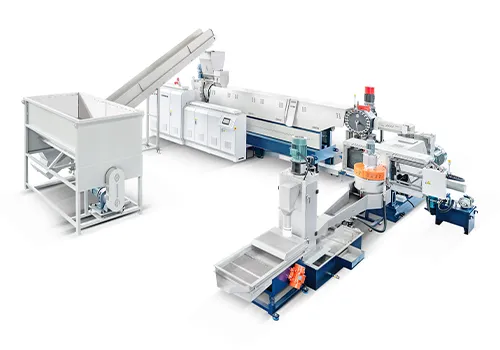
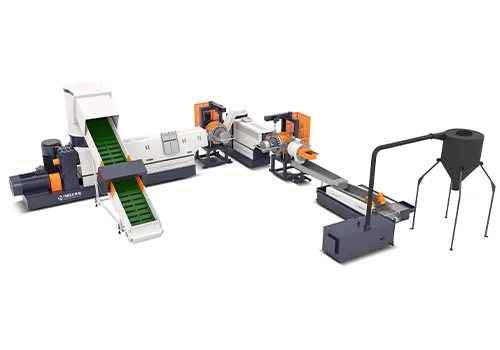
When a project requires recycled pellets, clean and dry materials enter an extruder. The machine melts the plastic, while a filtration system removes remaining solid impurities. The molten material then passes through a die and enters the pelletizing section.
Purui Machinery’s pp pe film pelletizing line can include a feeding system, extruder, vacuum exhaust system, hydraulic screen changer, cooling section, and cutting unit.
Common pelletizing methods include water ring, strand, and underwater pelletizing. The suitable method depends on the material characteristics and production requirements.
Recycled PP and PE Materials Support Different Applications:
Recycled PP and PE can return to manufacturing as plastic flakes or pellets. Manufacturers may use them to produce suitable plastic products, packaging materials, and other non-food-contact products.
However, not every recycled material suits every application. Material composition, cleanliness, and physical properties all affect its final use. Therefore, manufacturers should test recycled materials before production.
Purui Machinery focuses on plastic recycling washing lines and pelletizing equipment for PP and PE films, woven bags, and other plastic waste.
FAQ:
Q1: Can PP and PE waste plastics share one recycling line?
A: Some PP and PE materials can use the same line. However, operators must check material compatibility and adjust the equipment configuration.
Q2: Why does film recycling require a squeeze dryer?
A: Plastic films retain water after washing. A squeeze dryer removes additional moisture and prepares the material for extrusion.
Q3: What products can recycled PP and PE make?
A: Recycled PP and PE can become flakes or pellets for suitable plastic manufacturing applications.
Q4: Does every recycling line need a pelletizing machine?
A: No. A washing line can produce clean plastic flakes. A pelletizing line is only necessary when the project requires recycled pellets.
Why Choose Purui Machinery:
With over 25+ years of expertise and a footprint in over 100 countries, Purui Machinery continues to lead the way in plastic regeneration.

Purui Machinery is a high-tech enterprise specializing in the R&D and manufacturing of plastic recycling machinery. Its product portfolio includes plastic pelletizing lines, washing lines, and crushing equipment. Purui is dedicated to providing global customers with the most efficient, reliable, and intelligent plastic regeneration systems.
Contact Us to Get Your Customized Recycling Solution:
E-mail: [email protected]
Tel / Whatsapp: +8617701563079
Partner with Purui Machinery - Turn your plastic waste into premium-grade sustainable profits.