








How To Improve The Quality Of Plastic Recycling Pellets
Many plastic recycling factories struggle with defective pellets, including black spots, bubbles, uneven sizes and impure compositions. Most quality issues are not caused by raw materials alone, but by unreasonable process settings and mismatched plastic recycling machinery. With years of on‑site manufacturing and service experience, PURUI summarizes practical and stable methods to help recyclers consistently produce high‑standard recycling pellets in daily production.
Stable pellet quality requires standardized pretreatment, precise extrusion filtration, scientific pelletizing and regular equipment maintenance. Every production link directly affects the final pellet performance. Below are the most effective improvement solutions adopted in actual recycling lines.

Optimize Raw Material Pretreatment with Professional Plastic recycling machinery:
Poor cleaning and sorting are the top causes of low‑quality pellets. Impurities such as sediment, ink, glue and mixed plastics cannot be completely removed by simple manual sorting. Professional processing equipment ensures clean feedstock before granulation.
- Sorting classification: Separate different plastic materials and remove obvious foreign matter to avoid mixed melting and discoloration.
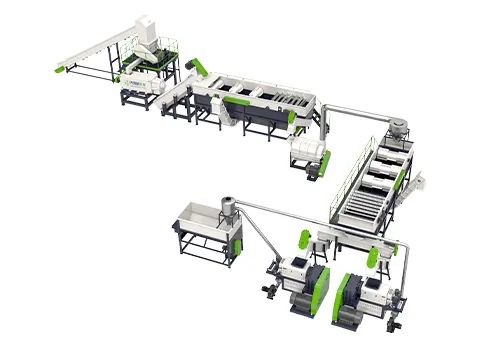
- Multi‑stage washing: Use friction washing and floating washing systems to remove residual ink, dirt and sticky impurities.
- Complete drying: Eliminate surface moisture to prevent bubble generation during extrusion.
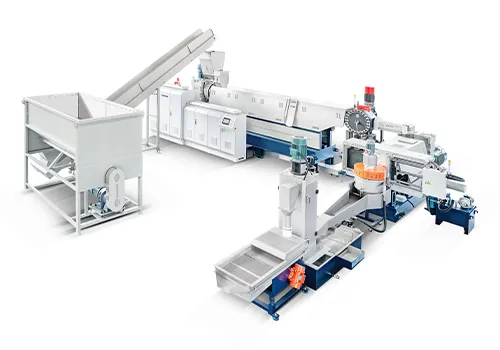
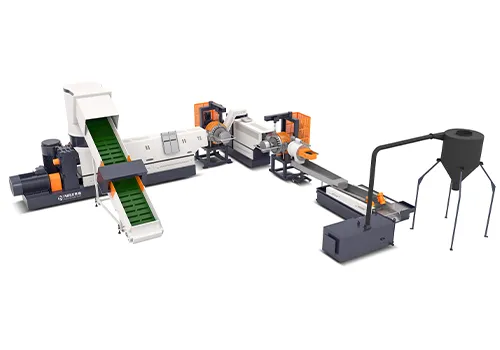
Well configured plastic recycling pelletzing machinery from PURUI completes all pretreatment steps efficiently, greatly reducing impurity sources and laying a foundation for high‑purity pellets.
Precisely Control Extrusion and Melt Filtration Process:
Extrusion and filtration are critical to deciding pellet purity and appearance after pretreatment, as improper temperature, speed and filtration settings will easily cause material degradation and residual impurities. Manufacturers need to adopt reasonable temperature matching for different plastic types, conduct timely melt filtration by regularly replacing filter screens, and maintain stable screw speed for uniform melting pressure. PURUI granulation lines support flexible parameter adjustment for various waste materials, effectively improving pellet uniformity and cleanness.
Standardize Pelletizing and Cooling Procedures:
Even high‑quality melt can result in defective pellets without standardized cutting and cooling processes, so operators must keep cutter blades sharp to avoid irregular and broken pellets, maintain stable cooling water temperature to prevent deformation and surface cracks, and complete final dewatering and screening to remove wet and irregular particles for better finished product consistency.

Insist on Regular Equipment Maintenance:
Aging and worn parts gradually reduce production quality in long‑term operation. Daily maintenance avoids hidden quality risks.
- Check screw and barrel regularly: Prevent material carbonization caused by wear and residual materials.
- Replace vulnerable parts on schedule: Ensure stable filtration and melting effects.
- Clean the whole line periodically: Avoid cross‑contamination between different batches.
PURUI provides customers with professional maintenance guidelines to keep long‑term stable pellet quality for recycling production lines.

FAQ:
Q1: What are the main factors affecting recycled plastic pellet quality?
A: The main factors include raw material pretreatment effect, precision of plastic‑recycling‑machinery, extrusion temperature and filtration management, pelletizing operation standardization and daily equipment maintenance. Most pellet defects can be solved by optimizing equipment and processes.
Q2: Can better plastic recycling equipment completely eliminate black spots in pellets?
A: Yes. Complete washing pretreatment and high‑precision melt filtration equipment from PURUI can effectively remove impurities and avoid material carbonization. Matching process parameters can basically eliminate black spots and improve pellet cleanness.
Q3: How to keep pellet quality stable in long‑term mass production?
A: Stable quality relies on standardized operation, regular equipment maintenance and reasonable parameter adjustment. PURUI supports customized plastic recycling machinery solutions and on‑site technical guidance to help customers maintain consistent pellet quality for a long time.
Why Choose Purui Machinery:
With over 25+ years of expertise and a footprint in over 100 countries, Purui Machinery continues to lead the way in plastic regeneration.

Purui Machinery is a high-tech enterprise specializing in the R&D and manufacturing of plastic recycling machinery. Its product portfolio includes plastic pelletizing lines, washing lines, and crushing equipment. Purui is dedicated to providing global customers with the most efficient, reliable, and intelligent plastic regeneration systems.
Contact Us to Get Your Customized Recycling Solution:
E-mail: [email protected]
Tel / Whatsapp: +8617701563079
Partner with Purui Machinery - Turn your plastic waste into premium-grade sustainable profits.